

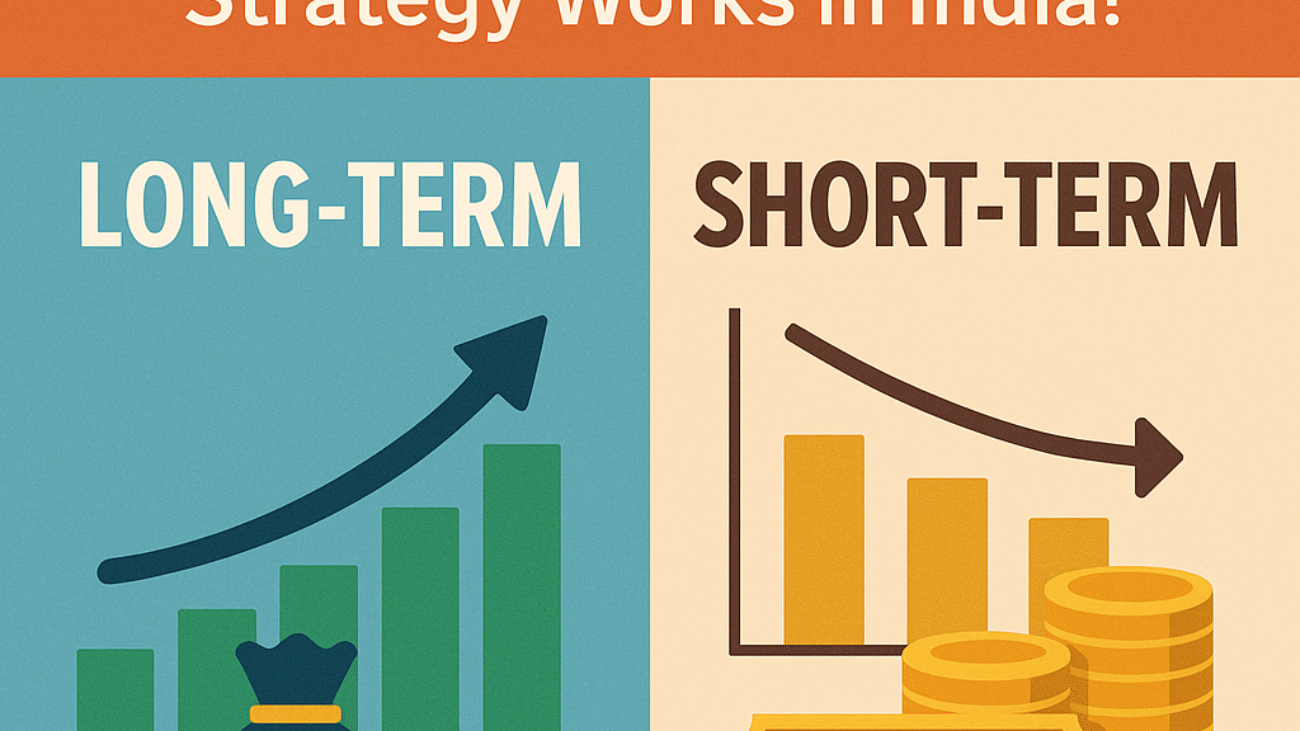
As an investor in India, you might find yourself juggling questions in your mind: Should I prioritize long-term growth or focus on short-term gains? Both strategies have their merits, but understanding their differences is crucial. After reading this article, you will grasp which dividend investing strategy suits your goals.
In the world of dividend investing, the focus can either be on long-term holdings or short-term gains. Each approach has unique benefits. Want to reap rewards now or build wealth over time? Let’s explore to find the right fit for you.
Understanding Long-Term Dividend Investing
Long-term dividend investing is about purchasing shares of companies that consistently pay dividends, holding them over years or decades. The strategy hinges on compound interest, allowing reinvestment of dividends for exponential growth. It provides stable income and capital appreciation over time.
DIY tip: Identify companies with a strong dividend history and consider setting up a systematic investment plan (SIP) to gradually build your position.
Benefits of Short-Term Dividend Strategies
Short-term dividend investing involves buying stocks for quick gains, typically looking for dividend announcements or ex-dividend dates. This method can yield immediate rewards but also comes with a higher risk profile due to market volatility. Quick trades can be profitable, but timing is crucial.
DIY tip: Monitor upcoming dividend dates and news that might affect stock prices. Tools like a SIP calculator can help you assess your short-term plans.
Balancing the Two Strategies for Maximum Gain
A hybrid approach can be effective, allowing you to enjoy immediate dividends while planning for long-term growth. This strategy requires careful diversification, ensuring your portfolio comprises both stable long-term stocks and potentially high-return short-term trades. Balancing the two can mitigate risks and enhance overall returns.
DIY tip: Regularly assess your portfolio to adjust your asset allocation, ensuring you maintain a healthy balance between short and long-term investments.
Analyzing Your Investment Objectives
Understanding your investment goals is crucial in deciding which dividend strategy to pursue. If you’re seeking immediate cash flow, short-term investing could be advantageous. However, if your goal is wealth accumulation, focusing on long-term dividend growth may align better with your objectives.
DIY tip: Write down your financial goals and time horizons. This clarity will guide your future investment decisions and strategies.
A Practical Example
Consider an investor who decided to invest primarily in long-term dividend stocks. By diligently reinvesting dividends, they found that over a decade their initial investment grew significantly, enabling them to enjoy both capital growth and passive income.
Case Study
Meet Rakesh, 35, from Bengaluru, a software engineer with a monthly investible surplus of ₹50,000. Initially, Rakesh focused solely on short-term dividend stocks, resulting in fluctuating returns. After reassessing his strategy, he started investing 70% of his surplus in long-term dividend stocks and 30% in short-term trades. In a year, his annual dividend income rose by 50%, illustrating the positive impact of a diversified strategy for an illustrative scenario.
Frequently Asked Questions
What is the best dividend strategy for beginners?
Beginners often benefit from long-term dividend investing. This strategy provides steady growth and less stress, making it easier to manage compared to short-term trading.
How can I reinvest dividends effectively?
Reinvesting dividends can be done automatically through a dividend reinvestment plan (DRIP), which buys more shares for you. This enhances compounding and builds wealth over time.
Is short-term dividend investing risky?
Yes, short-term dividend investing can be riskier due to market volatility. Prices can fluctuate dramatically, making it essential to analyze market trends and company performance regularly.
Can I combine both strategies?
Absolutely! A balanced approach allows you to enjoy immediate returns while benefiting from long-term stability. Diversifying your portfolio this way can yield better overall returns.
Conclusion
Both long-term and short-term dividend investing hold promise, depending on your financial objectives. Understanding the nuances helps you make informed decisions, ultimately leading to better investment outcomes.
Ready to see how this works for you? Test your strategy with the WealthAlpha Portfolio Evaluator.
Disclaimer: This article is for educational purposes only and does not constitute investment advice. Mutual fund and securities investments are subject to market risks. Past performance does not indicate future results. Please read all scheme-related documents carefully and consult a SEBI-registered investment adviser before investing.