
By Richa Naidu and Yadarisa Shabong
LONDON, March 31 (Reuters) – will merge its food business with spice maker , it said on Tuesday, creating a company worth around $65 billion in the second-largest food transaction in history.
The agreement is CEO Fernando Fernandez’s biggest gambit since taking the helm in March 2025 and comes after he completed the spin-off last year of Unilever’s multi-billion euro ice cream business, home to Ben & Jerry’s and Magnum.
Though Unilever’s food unit is a high-margin business, sales growth has lagged the company’s personal goods and beauty businesses and weighed on its ambition to increase overall group sales by 4%-6% in the near term.
Investor pressure to shed food brands increased after it was revealed in 2022 that billionaire activist-shareholder Nelson Peltz had built a stake in Unilever. Peltz has been linked to the departure of former CEOs Alan Jope and Hein Schumacher, with Fernandez, Unilever’s former finance chief and a veteran beauty and wellbeing executive, promoted to focus on streamlining the company’s portfolio.
Still, Unilever shares fell 3% to a nearly one-year low with investors and analysts criticising the deal’s structure, while McCormick shares tumbled 9% as Wall Street trading opened.
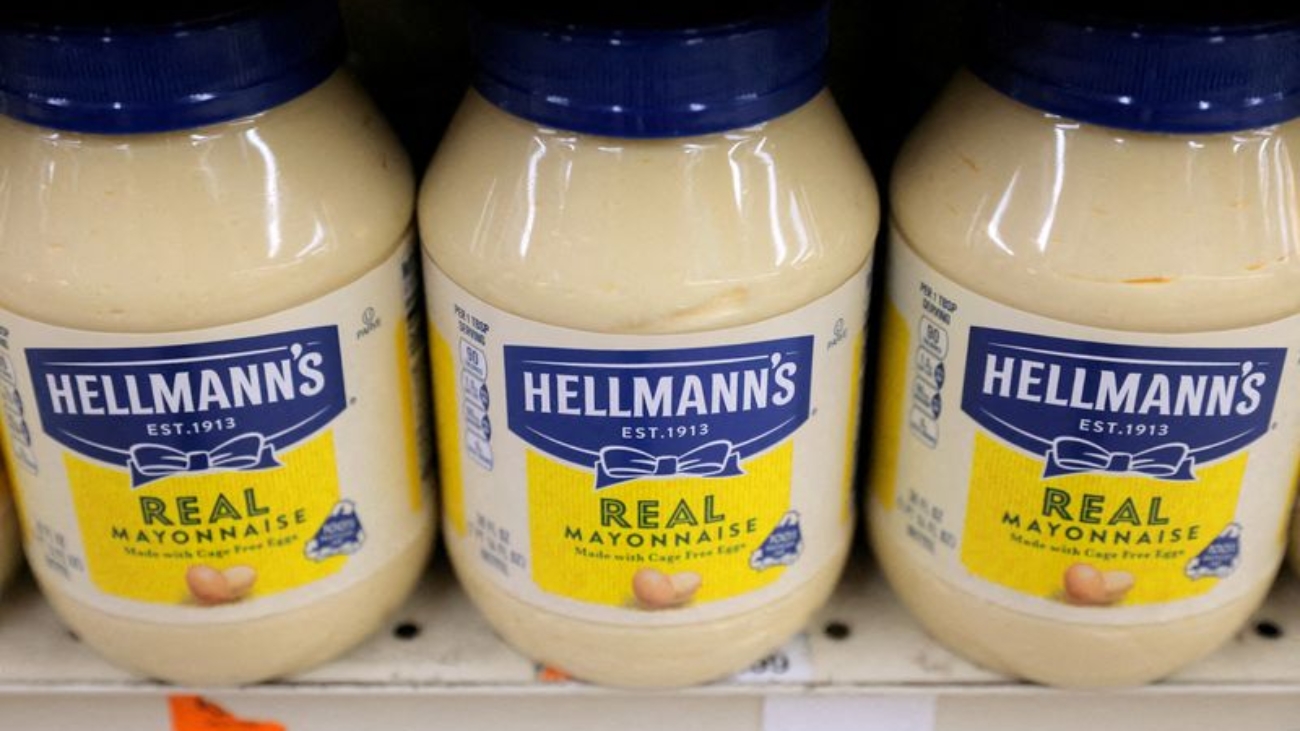
“Why is Unilever disposing of a business dominated by two brands, of which it owned 100%, for a minimal control premium and leaving its shareholders with a 55% shareholding in a sprawling food business?” RBC analyst James Edward Jones said, referring to Knorr stock cubes and Hellmann’s mayonnaise.
Unilever and McCormick said the transaction will be structured as a so-called Reverse Morris Trust (RMT), which offers tax benefits. Unilever will spin off the food division and then merge it with the Cholula hot sauce owner. The deal is the largest RMT transaction involving a European company, said Rothschild, which served as joint-lead financial adviser to McCormick.
Unilever and its shareholders will have a 65% stake in the fully diluted combined-company outstanding equity, equivalent to $29.1 billion based on McCormick’s one-month volume-weighted average price of $57.84, the companies said in a joint statement.
The British consumer goods giant will also receive $15.7 billion in cash. The deal values Unilever’s food business at nearly $45 billion and McCormick at about $21.0 billion, the companies said. The agreement excludes certain assets, including Unilever’s operations in India, they added.
“It’s true that it will leave Unilever as a pure-play (household and personal care) business, but this does not strike us as a smooth way of bringing it about,” RBC’s Jones added.
’INCREMENTAL FOR UNILEVER’
Unilever traces its roots in the food sector to 1860, when one of its Dutch founding families began building up a business in the butter trade. Unilever itself was created in 1929 when Margarine Unie and Lever Brothers joined in what was at the time one of the biggest industrial mergers ever in Europe.
Last year, the food business accounted for just over a quarter of overall annual sales of 50.5 billion euros, and a big portion of its 96,000 employees around the world.
“The deal will be transformational for McCormick, but incremental for Unilever,” said Chris Beckett, consumer staples analyst at Quilter Cheviot, a Unilever investor. “McCormick gets global scale and distribution particularly in condiments and hopefully gets better sales growth from Unilever’s brands.”
Unilever’s sprawling consumer brand empire also includes Dove soaps, Cif cleaning products and Axe deodorant.
The company has spent most of the last century snapping up food and beverage brands from Marmite to Colman’s and Horlick’s – until the past decade when health-conscious shoppers started shying away from packaged food in favour of fresh groceries.
The rise of GLP-1 weight loss drugs in recent years has further eroded demand and investors’ faith in packaged food, especially due to stiff competition from cheaper private label brands.
Over the past year, Unilever has divested several non-core food assets, including snack brand Graze and plant-based meat brand The Vegetarian Butcher.
“There is logic in a disposal of the foods business where volumes have been muted over the past years,” Harsharan Mann, a portfolio manager at Unilever shareholder Aviva Investors, said in comments sent to Reuters. The RMT model is “sensible” given tax issues that had plagued similar deals in recent years, she added.
“Global peers such as Procter & Gamble have successfully used this structure in prior years for disposals of non-core businesses in a tax-free structure.”
The deal with McCormick comes on top of an ongoing cost-cutting programme Unilever has had in place since 2024, meant to save around 800 million euros in costs over the next three years.
Reuters reported exclusively late on Monday that Unilever had implemented a global hiring freeze “at all levels” that will last at least three months, citing the effects of the widening conflict in the Middle East.
($1 = 0.8724 euros)

Leave A Comment