

Investing.com — European retail is being reshaped by two powerful forces, the relentless price pressure of Shein pushing budget players into a corner, and a consumer at the mid-to-upper end of the market trading up to fewer, better-quality items.
That bifurcation is creating clear winners and losers. Against a backdrop of Middle East conflict disruption, EU customs changes, and rising freight costs, RBC Capital Markets identifies four stocks best positioned to outperform: , , , and .
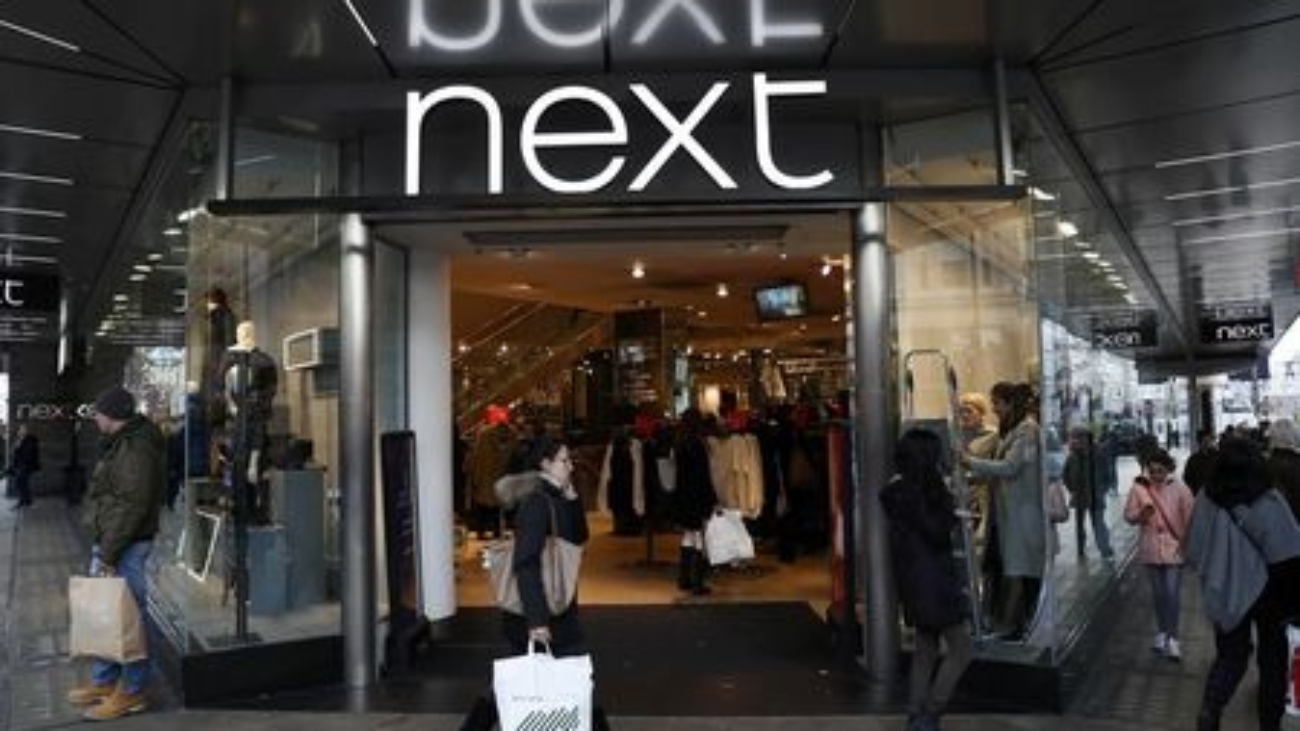
Next (NXT, Outperform, PT £155)
Next remains the standout name in UK retail. Its full-year results confirmed what the bull case has long argued: the business is more than a domestic clothing retailer.
International online sales grew 18% and are forecast to hit 16% again next year, driven by strong performance in Germany, the Middle East (disruption notwithstanding), and via the Zalando ZEOS fulfilment partnership.
CEO Simon Wolfson dismissed concerns around AI-driven website disintermediation, arguing the economics of delivery costs and product returns make agentic shopping less threatening than feared.
With a 3-year EPS CAGR of around 8.5%, trading at just 16x forward earnings, low by global growth retail standards, and returning over 5% in cash annually including buybacks, Next offers a rare combination of quality, growth, and shareholder returns.
Inditex (ITX, Outperform, PT €62)
Inditex is the clearest beneficiary of the market’s bifurcation away from ultra-cheap fast fashion. While Primark has been squeezed by Shein’s pricing aggression and H&M has struggled to reposition, Zara has successfully moved its relative pricing upward while maintaining the fashion credibility and newness that keeps customers coming back.
RBC’s Spring pricing survey across five European markets confirms Zara now sits meaningfully above the lower end of the market, and crucially, it is pulling it off in a way H&M has not yet managed.
With a similar 3-year EPS CAGR to Next at around 8-9%, a fortress balance sheet with net cash of nearly €11 billion, and a 3.8% dividend yield, Inditex trades at a premium (23x) that looks justified given its global scale and execution track record.
Kingfisher (KGF, Outperform, PT 360p)
Kingfisher is the most contrarian call of the four. The stock has been treated by the market as an interest rate cyclical, sensitive to housing activity and consumer discretionary spending, but RBC argues the structural drivers of its transformation are being underappreciated.
Its digital marketplace at B&Q is now in its third year, attracting new customers and generating take rates of 10-15%. The trade customer segment is growing strongly, Screwfix continues its proven expansion playbook, and AI-driven inventory management is delivering steady working capital improvements.
At 11x forward earnings with a 4.4% dividend yield and over 10% free cash flow yield, the valuation leaves meaningful room for upside if the market re-rates it toward its digital and trade growth potential rather than its legacy cyclical profile.
Zalando (ZAL, Outperform, PT €30)
Zalando offers the most attractive growth-to-valuation trade-off in the peer group. Its 3-year EPS CAGR of 17% is the highest of any stock in RBC’s European retail coverage, yet it trades at just 13x, a significant discount to peers with inferior growth profiles.
The ZEOS logistics platform, which allows brands and retailers including Next to fulfil across mainland Europe from a single inventory pool, is maturing into a genuine structural advantage.
Gross margin pressure seen last summer, when Zalando stepped up promotions in response to Shein’s push into Europe, now looks like a one-off rather than a trend.
With the EU set to abolish its duty-free threshold for small parcels from July 2026, Shein’s pricing edge will narrow slightly, giving Zalando breathing room at the promotional end of the market.
This article was generated with the support of AI and reviewed by an editor. For more information see our T&C.

Leave A Comment