

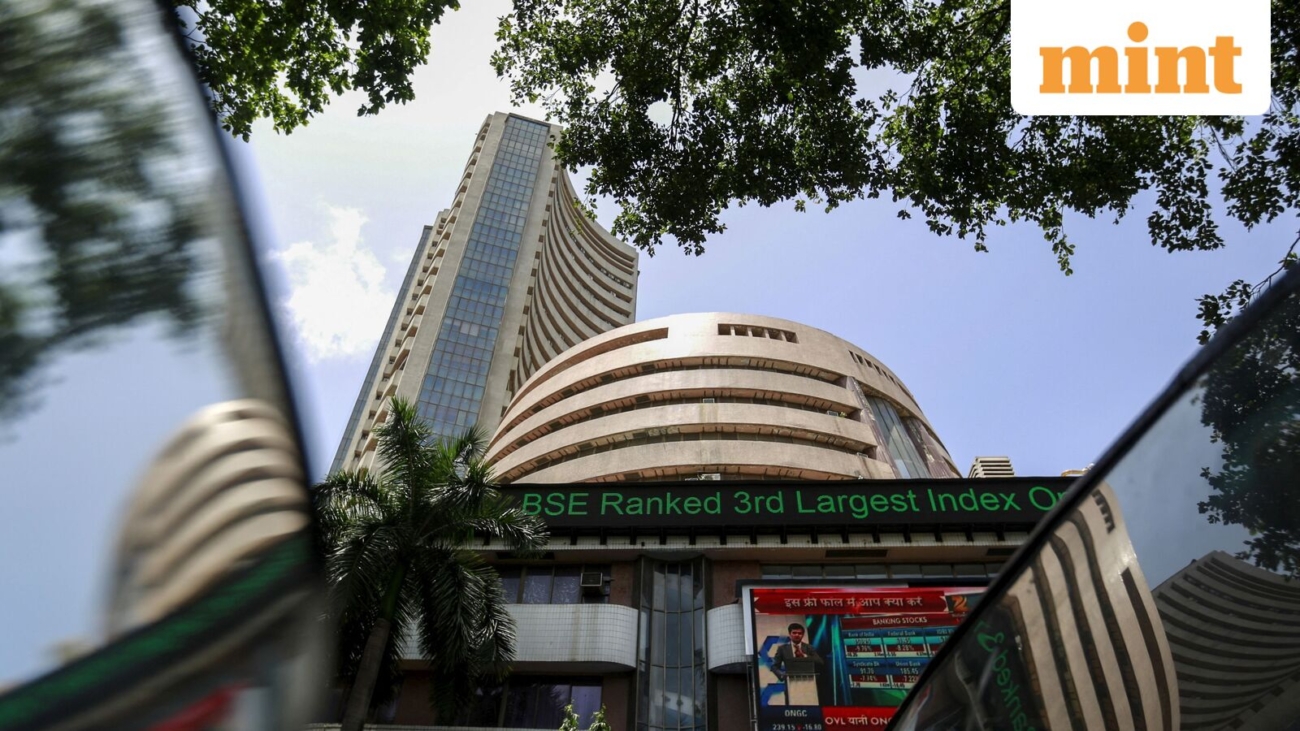
Although India was among the early countries to establish stock trading, it took several decades for its equity markets to evolve into their current scale and depth.
In recent years, particularly following the outbreak of the Covid-19 pandemic, there has been a noticeable surge in interest in stock market investing among retail investors, as they increasingly look to diversify beyond traditional asset classes such as real estate and fixed deposits.
This growing participation has been largely driven by the rapid expansion of the Indian economy, offering investors an opportunity to benefit from the country’s dynamic growth trajectory.
A significant portion of this interest has come from millennials, who are embracing stock market investments much faster than previous generations. While some prefer direct equity investing through demat accounts, many continue to favour the disciplined approach of systematic investment plans (SIPs).
Access to financial markets has also become significantly easier, with mobile-based trading platforms and advanced tools offered by brokerages enabling investors to compare stocks using key financial metrics and make more informed decisions.
Moreover, regulatory efforts aimed at improving investor awareness and strengthening market participation have further supported this trend, helping India emerge among the top five global equity markets, with market capitalization in recent months topping ₹450 lakh crore.
When investing wasn’t easy
However, investing in equities was not always this seamless. A few decades ago, access to the stock market was limited, and investors had to physically visit brokerage offices to place trades, often with limited information and fewer investment options.
At the time, the market itself was relatively small, with fewer listed companies and limited diversification opportunities.
For an investor opting to invest in the Sensex—the benchmark index—the journey was far from straightforward, with limited access, fewer investment avenues, and a lack of real-time information shaping decision-making.
Crises and recoveries that shaped returns
Imagine an investor who decided to invest ₹1 lakh every year starting from 2001 and continued this disciplined approach for the next 25 years. Such consistency would have resulted in substantial wealth creation over time.
The performance of the Sensex during this period has been remarkable. The index, which stood at 3,262 in 2001, surged sharply in the following years, reaching 20,286 by early 2008. However, this rally was interrupted by the global financial crisis, which triggered a steep correction.
Despite the sharp fall, the recovery was equally striking. The index rebounded strongly in 2009, delivering an impressive annual gain of around 81%, one of its best performances on record, and fully recouping the losses from the previous year.
In 2011, the Sensex faced another major setback, declining 24.64% amid the Eurozone crisis. However, the market demonstrated resilience in the years that followed, closing higher in 13 out of the next 14 years, with 2011 remaining the only year of double-digit decline after the 2008 crisis.
Even during the pandemic-hit year of 2020, the index ended with gains of around 16%, reflecting the underlying strength of the market. This momentum continued in the subsequent years, with the Sensex hitting a record high of 86,159 in early 2026.
Overall, the Sensex has delivered a cumulative return of over 2,500% during this period. An investor who consistently invested ₹1 lakh every year and stayed invested through the end of 2025 would have seen their total investment grow to approximately ₹1.54 crore, highlighting the power of disciplined investing and long-term compounding.
| Year | Sensex Level (closing price every year) | Investment | Units Bought | Cumulative Units | Portfolio Value |
|---|---|---|---|---|---|
| 2001 | 3262 | 100000 | 15.32801962 | 15.32801962 | 2612507.664 |
| 2002 | 3377 | 100000 | 14.80604086 | 30.13406048 | 5136049.268 |
| 2003 | 5838 | 100000 | 8.56457691 | 38.69863739 | 6595795.758 |
| 2004 | 6602 | 100000 | 7.573462587 | 46.27209998 | 7886616.72 |
| 2005 | 9397 | 100000 | 5.320847079 | 51.59294706 | 8793501.896 |
| 2006 | 13786 | 100000 | 3.626867837 | 55.2198149 | 9411665.252 |
| 2007 | 20286 | 100000 | 2.464754018 | 57.68456891 | 9831757.926 |
| 2008 | 9647 | 100000 | 5.182958433 | 62.86752735 | 10715141.36 |
| 2009 | 17461 | 100000 | 2.863524426 | 65.73105177 | 11203200.46 |
| 2010 | 20509 | 100000 | 2.437954069 | 68.16900584 | 11618725.36 |
| 2011 | 15454 | 100000 | 3.235408309 | 71.40441415 | 12170168.35 |
| 2012 | 19426 | 100000 | 2.573870071 | 73.97828422 | 12608858.76 |
| 2013 | 21170 | 100000 | 2.361832782 | 76.340117 | 13011409.54 |
| 2014 | 27499 | 100000 | 1.818247936 | 78.15836494 | 13321311.72 |
| 2015 | 26117 | 100000 | 1.914461845 | 80.07282679 | 13647612.6 |
| 2016 | 26627 | 100000 | 1.877793217 | 81.95062 | 13967663.67 |
| 2017 | 34057 | 100000 | 1.468126964 | 83.41874697 | 14217891.23 |
| 2018 | 36068 | 100000 | 1.386270378 | 84.80501734 | 14454167.16 |
| 2019 | 41253 | 100000 | 1.212033064 | 86.01705041 | 14660746.07 |
| 2020 | 47751 | 100000 | 1.04709849 | 87.0641489 | 14839213.54 |
| 2021 | 58253 | 100000 | 0.858324893 | 87.92247379 | 14985506.43 |
| 2022 | 60840 | 100000 | 0.821827745 | 88.74430154 | 15125578.75 |
| 2023 | 72240 | 100000 | 0.69213732 | 89.43643886 | 15243546.64 |
| 2024 | 78139 | 100000 | 0.639885333 | 90.07632419 | 15352608.69 |
| 2025 | 85220 | 100000 | 0.586716733 | 90.66304092 | 15452608.69 |
Volatility vs wealth creation
Despite multiple corrections and periods of underperformance, the long-term trajectory has remained upward, demonstrating that timing the market is less effective than time spent in the market.
Long-term investments may take time to grow, but they undoubtedly provide a strong avenue for wealth creation. However, choosing stocks wisely is equally important, as wrong picks can lead to substantial wealth erosion, given that thousands of stocks are available in the market.
Disclaimer: We advise investors to check with certified experts before making any investment decisions.
Source link

Leave A Comment