

So where should investors look when everyone seems to be nervous? Don’t try the bond market. With concerns about tariffs once again raising the specter of persistent inflation, the yield on the 10-year U.S. Treasury spiked to around 4.3%, its highest level since early September. Yields rise when investors sell bonds, sending their prices lower.
Still, there appear to be some pockets of safety in the stock and commodities markets. Smaller companies, and less volatile shares, beyond the huge tech companies that have led the rally over the past few years, are worth a look, market watchers say.
“Diversification is important. Selection matters,” said Phil Neuhart, senior director of market and economic research at First Citizens Wealth.
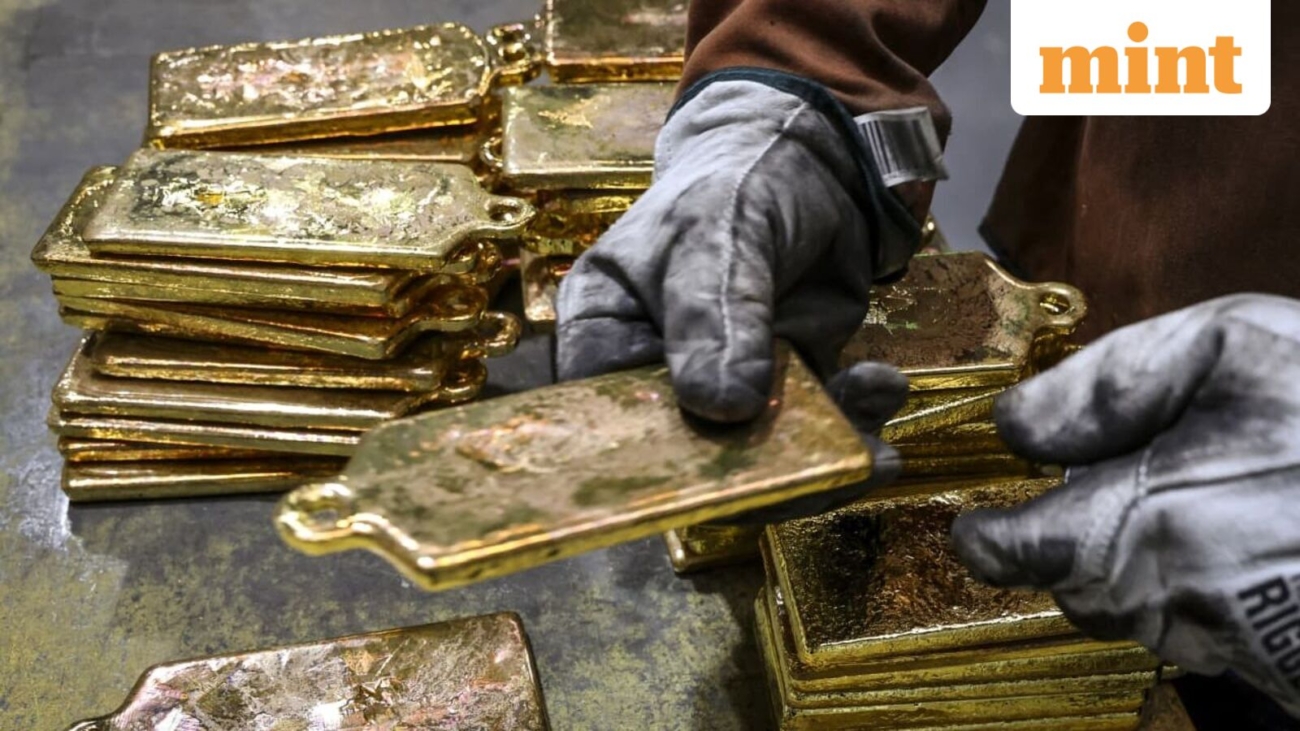
Among commodities, gold and silver, a play on a weak U.S. dollar and expectations of more geopolitical instability, are popping once again. The surge in precious metals is boosting mining stocks as well.
The VanEck Gold Miners and Global X Silver Miners exchange-traded funds were both up more than 5% in late afternoon trading Tuesday. Newmont was up 4% to a new all-time high, making it one of the best-performing stocks in the S&P 500 on what is turning out to be a rough day for the markets. Silver miner Hecla, which has soared nearly 400% in the past 12 months, rose another 4% and also hit a record high.
Oil is another commodity in focus given the questions about what’s going to happen in Venezuela now that the U.S. has captured former leader Nicolás Maduro, plus uncertainty over how the protests in Iran, and the U.S.’s response to them, could affect the flow of crude from the Middle East.
Crude prices are holding steady around $60 a barrel. Oil is now up more than 5% so far this year.
Energy stocks were mostly unchanged Tuesday. The State Street Energy Select Sector SPDR ETF was flat, making it one of the few sector exchange-traded funds that wasn’t down notably for the day.
Chevron stock was slightly higher, making it one of the better performers in the Dow Jones Industrial Average. The stock is up nearly 10% already this year.
With market jitters on the rise again, investors might also want to look to lower volatility stocks that tend to get hit less during times of Wall Street stress.
Although the Invesco S&P 500 Low Volatility ETF was down 0.7% Tuesday, that compares with a loss of 2% for the S&P 500 and hefty declines for other indexes. As the fund’s name implies, it invests in stocks that have the smallest gains or losses over the previous year.
The ETF, which tracks a passive, rules-based index, is heavy on defensive-oriented stocks in the consumer staples, utilities, financials, real estate, and industrial sectors.
Many of the top stocks—Waste Management and rival Republic Services, TJX, McDonald’s, Coca-Cola, Evergy, Duke Energy and Realty Income are major holdings—pay hefty dividends, adding to the allure for investors seeking safety and quality.
Neuhart, from First Citizens Wealth, told Barron’s that investors need to emphasize quality stocks with strong balance sheets. He added that there are good opportunities in defensive sectors such as consumer staples and utilities. In fact, the State Street Consumer Staples Select Sector SPDR ETF was up slightly Tuesday, making it the only one of 11 sector ETFs in the green.
The key, at a time where investors are suddenly more wary of more expensive momentum stocks in light of renewed tariff worries and geopolitical fears, is to look for winners beyond the artificial-intelligence trade that has lifted the market for the past few years. The broadening of the rally into other sectors that began last year should pick up steam.
“There are tailwinds that are supportive of better market breadth,” said Ari Sass, president and portfolio manager at M.D. Sass.
Sass said in an interview with Barron’s that his firm typically owns shares of 2o to 25 companies as part of a strategy based on concentrated holdings of value stocks. He added that M.D. Sass has found bargains with companies outside of tech that have done recent acquisitions to boost market share, including the financial services company Capital One; Somnigroup, formed from the merger of Tempur Sealy and Mattress Firm; and the bottled water distributor Primo Brands.
Smaller stocks may also hold up better if trade tensions between the U.S. and Europe over Greenland escalate even further. Small-cap U.S. companies tend also to have more of a domestic focus than larger multinationals, particularly the Magnificent Seven.
“We have anticipated a reversal out of high momentum stocks in January given current valuations, geopolitical and macroeconomic unknowns [and] tariff rate uncertainty,” said Eric Teal, chief investment officer for Comerica Wealth Management, in a report Tuesday.
“Opportunities exist outside of large cap technology including regional/mid-sized banks and quality small cap companies,” Teal said.
Along those lines, the Russell 2000 index, while still off about 1% Tuesday afternoon, was down much less than the Dow, S&P 500, and Nasdaq Composite. Those three indexes have significant exposure to the megacap techs.
Write to Paul R. La Monica at paul.lamonica@barrons.com
Source link

Leave A Comment