

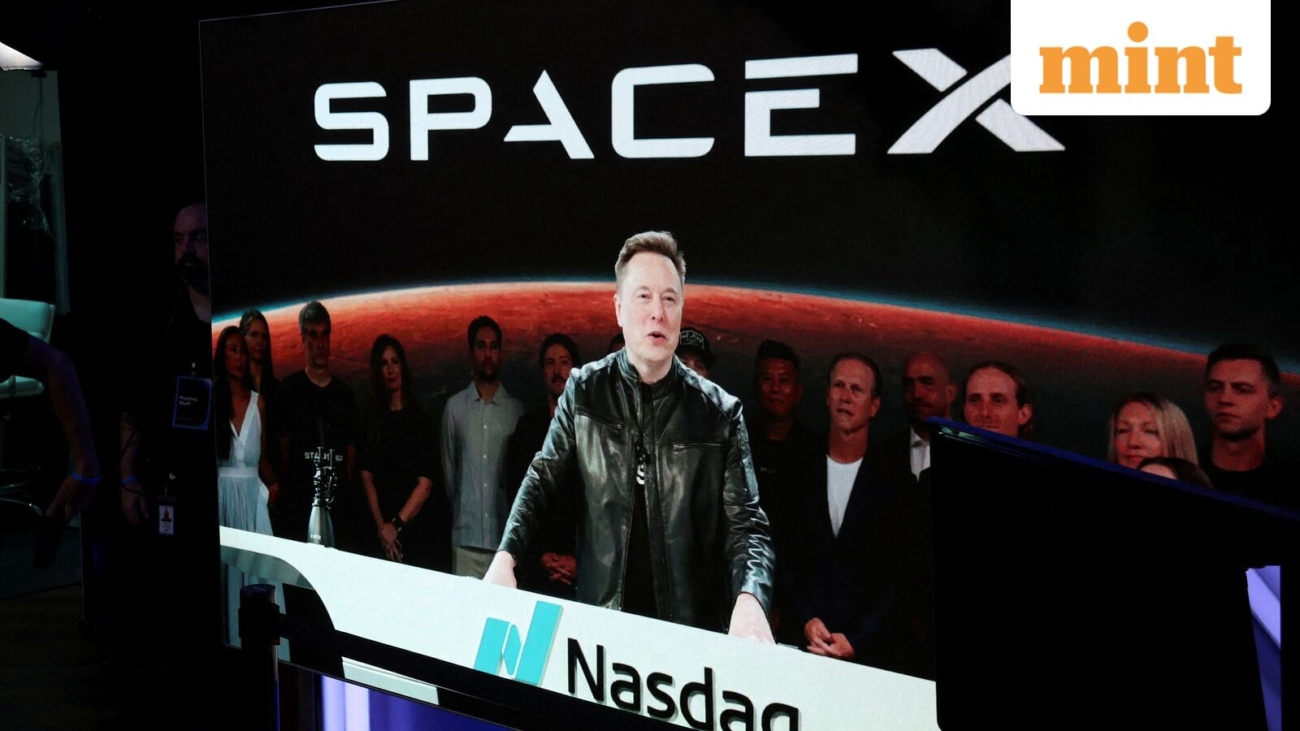
The initial euphoria surrounding SpaceX appears to be fading, with the shares falling another 5.3% in Monday’s trade to $137.68, hovering just above their IPO price of $135.
The stock has now completed one month of trading on Wall Street, but has remained highly volatile during the period. Following its record-breaking debut on 12 June, the shares quickly rallied to around $225, briefly pushing Elon Musk’s net worth above the $1 trillion mark and making him the first person to achieve that milestone.
However, the optimism soon faded as investors booked profits and global technology stocks came under pressure. As a result, the stock has surrendered all of its post-IPO gains and is now trading close to its issue price.
From its peak, the shares have plunged nearly 39%, wiping out a significant portion of the gains made by early investors.
The continued weakness in the stock comes despite its inclusion in the Nasdaq-100 Index last week, making it one of the fastest companies ever to be added to the benchmark. Ahead of the inclusion, investors had expected the move to trigger a fresh wave of demand from passive investment funds that track the index.
The addition followed Nasdaq’s recent revision to its eligibility rules, which allowed companies such as SpaceX to qualify much earlier than under the previous framework. Earlier, the stock was also added to the Russell 1000 Index in late June, just two weeks after its IPO.
Volatility ahead?
Viram Shah, Founder and CEO of Vested Finance, said that SpaceX’s core business fundamentals remain intact, with Starlink continuing to grow profitably and the company’s launch business setting new records.
However, he noted that the stock’s recent weakness is being driven more by its limited free float and premium valuation, which tend to amplify selling pressure, rather than any deterioration in the underlying business.
He added that the recent decline appears to be a combination of profit booking following the stock’s sharp post-listing rally and a broader market reassessment of how AI- and space-related companies should be valued.
“You had a near-vertical run in SpaceX right after listing, so some of this is simply gains being taken. But underneath it, the market is asking a harder question about how it wants to price these AI and space bets,” he said.
Shah also cautioned investors against making short-term decisions based on the recent volatility. Instead, he said investors should assess whether their portfolio allocation reflects the risks associated with high-growth companies.
He added that newly listed companies with limited public float and upcoming lock-up expiries can experience significant price swings in their initial quarters before finding a more stable valuation.
Disclaimer: The views and recommendations made above are those of individual analysts or broking companies, and not of Mint. We advise investors to check with certified experts before making any investment decisions.
Source link

Leave A Comment