

Wall Street has spent much of the past few years shrugging off bad news. The world has witnessed a widespread pandemic, a major war between Russia and Ukraine in Europe, inflation across major economies, including the US, and most recently, a conflict between US and Iran in the Middle East.
These geopolitical developments have repeatedly tested investor confidence, yet US stocks have continued to hit new highs. S&P 500 is up nearly 80% over the past five years, the Nasdaq up more than 86%.
Even with the global oil supply shock in over the past three-plus months, Wall Street has remained bullish. A big reason for that resilience has been the AI boom, which has fueled hopes of stronger corporate earnings and a new wave of productivity gains in technology companies.
Why Jamie Dimon remains cautious
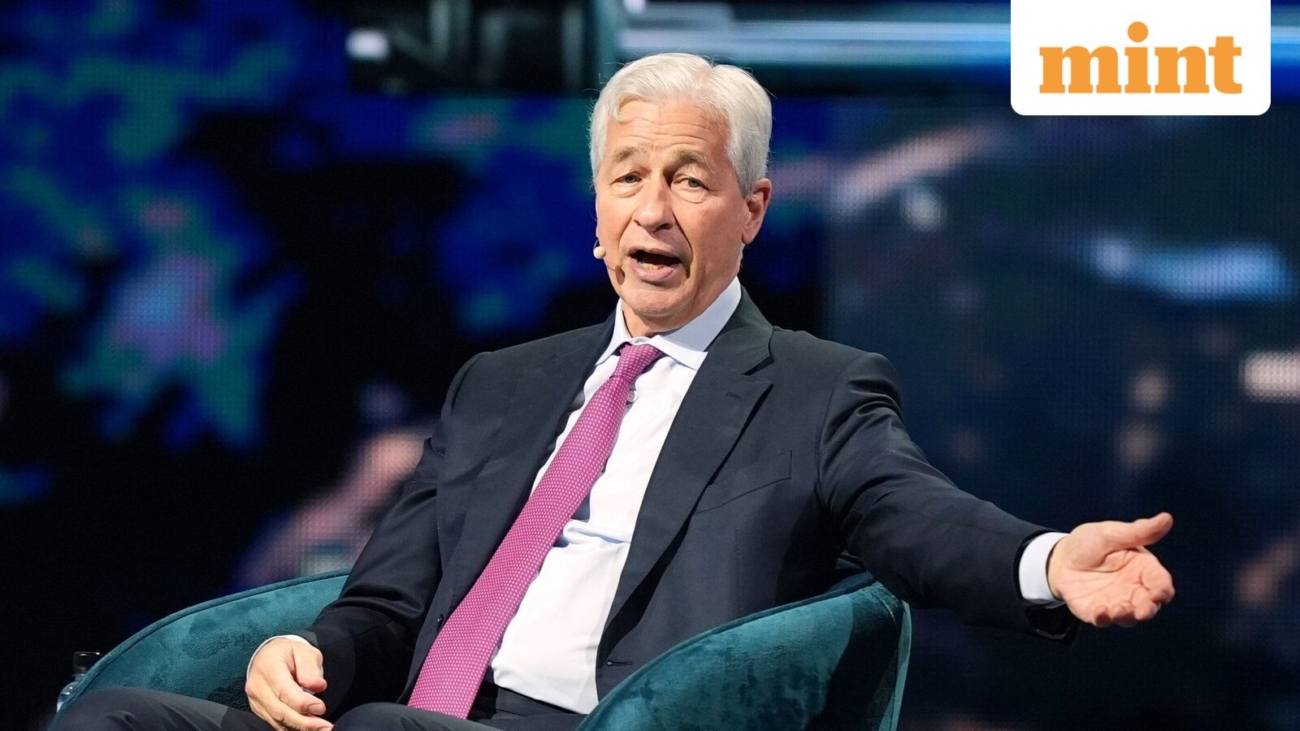
However, JPMorgan Chase CEO Jamie Dimon is not fully buying into the market’s optimism. While investors celebrate the AI-driven rally, the Wall Street veteran admitted he is a little taken aback by the market’s apparent complacency at present, Fortune reported.
“I am surprised because I think that you have Ukraine, Iran, oil, Russia, and our relationship with China. That stuff is really important for the free world, but it’s not necessarily the economy today,” Dimon said in discussion held by the Council on Foreign Relations.
While investors and analysts may be focused on the near-term direction of the financial markets, Dimon said he was more worried about what he calls the shifting “tectonic plates” that could shape the economy’s trajectory over the much longer term.
“I am quite worried about it…They may determine the economy, but it may be a year from now, a few years from now, or maybe it will all be reserved somehow. But I’m quite concerned about it, so put me in the more cautious category about how that plays out,” he was quoted as saying by the news publication.
How long does the cycle last?
While broad-based global uncertainties have made Dimon cautious, investors are still confident due to several factors that continue to support stock markets. He acknowledged that confidence can be derived from a surge in AI spending. Companies are expected to invest nearly $700 billion in the technology this year, a trend that is likely to continue, Fortune reported.
At the same time, unemployment is holding steady at 4.3%, and the GDP is expanding at approximately 2%.
Consumers have also been given a boost by the One Big Beautiful Bill Act. While much of this relief has been offset by a surge in fuel prices resulting from the Middle East conflict which began on February 28, 2026, it still remains a stimulus injection that helped the economy, the publication noted, citing research.
Dimon is aware that all cycles must come to an end. While he said these factors aren’t necessarily “bad” right now, he added: “You don’t know what they’re going to do a year from now, or two years from now. We’re in a bull market. It’s like a little tsunami. When that kind of thing happens, it’s very hard to stop.”
Source link

Leave A Comment