

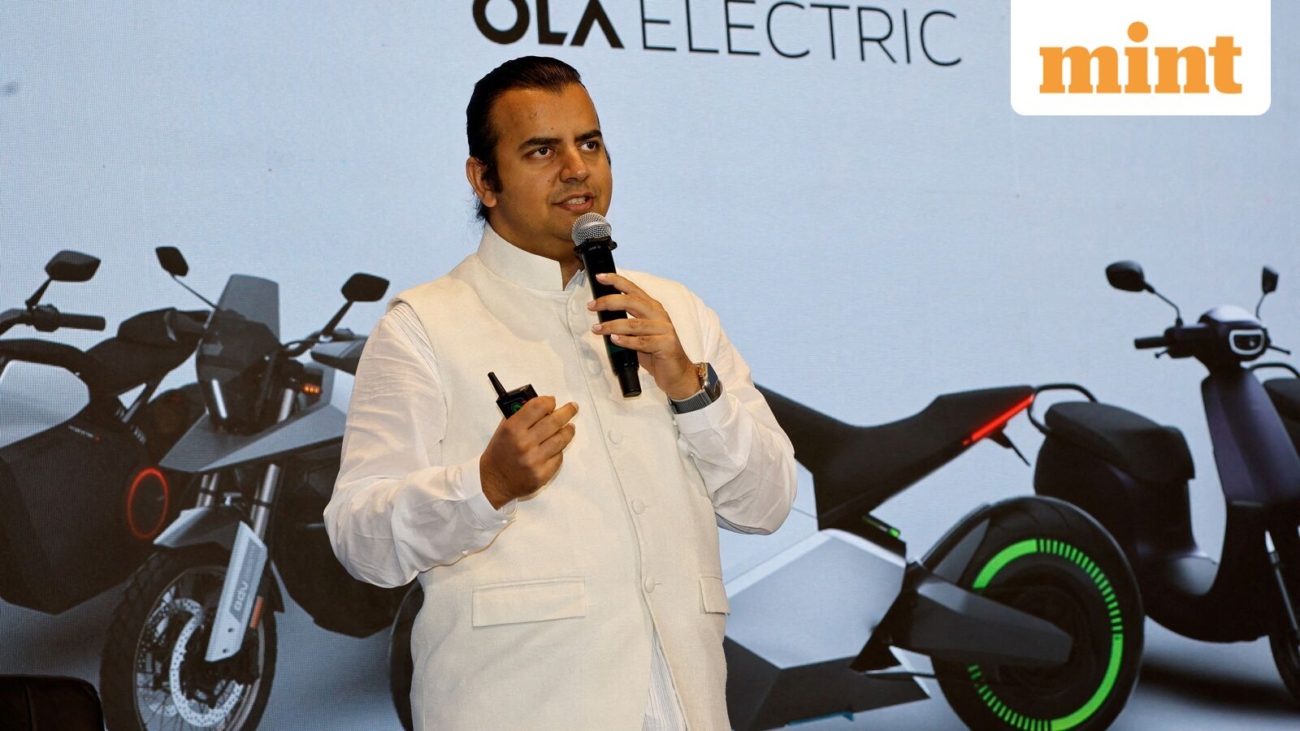
Shares of Ola Electric Mobility have staged a smart rebound, rising 70% in April so far, providing a relief to shareholders after the heavy bear hammering seen in prior months. In Friday’s trade, the new-age stock jumped another 6% and remains in the green for six of the seven trading sessions this month.
This marks a sharp turnaround from the back-to-back losses seen for six consecutive months starting in October, during which it eroded 85% of its value, showing signs of peak pessimism. During this period, it even plumbed a fresh low of ₹21.21 per share, with its market cap wiping off nearly ₹9,000 crore from investor wealth.
The stock corrected because investors were worried not only about weak volumes, but also about falling market share, heavy cash burn, widening losses and execution issues.
Why are Ola Electric shares rising?
However, this souring mood against Ola stock is starting to reverse, mainly boosted by a strong turnaround in rebound in March sales numbers, which seems to validate that the company is finally getting its house in order regarding after-sales service.
The market is reacting to the first visible sign that demand may be stabilising after a long period of disappointment. In March, vehicle registrations increased to about 10,117 units from 3,973 units in February. Daily orders also crossed 1,000 units in the last week of March, which gave the market confidence that demand had not collapsed permanently.
The company, which had faced service-related challenges in recent months, said that over 80% of vehicles are now serviced on the same day.
Furthermore, the company also announced a significant ₹60,000″>price reduction for Roadster 9.1 by ₹60,000, driven by a ramp-up in cell production that has boosted the cost efficiencies materially. Over the past year, Ola Electric has aggressively expanded production of its indigenously designed and manufactured 4680 Bharat Cell.
Abhinav Tiwari, Research Analyst at Bonanza, said that recent price cuts can definitely help Ola push volumes in the near term and recover some lost market share, especially because the electric two-wheeler market remains highly price sensitive. However, he added that lower pricing alone is not enough if margins remain weak, because aggressive discounting may improve volume but delay profitability.
At the same time, Ola is also accelerating the expansion of its Gigafactory, with capacity scaling toward 6 GWh, which could further drive down costs through vertical integration.
Is Ola Electric a good stock to buy now?
These developments signal that the company is finally getting its house in order and the market is clearly responding to it.
Analysts said that while the worst of the technical sell-off likely ended in March, the stock still faces fundamental hurdles—specifically achieving a clear path to profitability and managing its debt. We’ve moved from a “crisis” phase into a “show-me” phase, said Vinit Bolinjkar, Head of Research, Ventura.
At current levels, the stock is still trading at a significant discount from its highs, which offers a decent entry point for those who believe in Ola’s long-term vertical integration and its upcoming Gigafactory, said Bolinjkar, adding that for the average investor, however, waiting for the Q1 FY27 data is the safer play.
In Q3 FY26, the company reported revenue of only about ₹470 crore while net loss widened to around ₹487 crore, which shows that profitability remains under pressure even if sales improve.
According to Tiwari, it is still too early to say that the worst is over. “The bigger issue still remains operations, especially service quality. This has been the main reason customer confidence weakened earlier. Ola has claimed that more than 80% of vehicles are now being serviced on the same day and that parts availability has improved, which is positive if sustained,” he noted.
Analysts advise waiting for the sales figures for April and May before concluding that a recovery trend is firmly in place. Moreover, with the competitive landscape intensifying, Ola doesn’t have a smooth path to profitability.
At least two more months of consistent, high-volume registrations are needed to confirm that this isn’t just a “dead cat bounce” triggered by festive offers, said Bolinjkar. “With Bajaj and TVS becoming much more aggressive in the EV space, Ola no longer has a clear runway. A cautious “wait and watch” approach for another 4–6 weeks would provide a much clearer picture of whether this recovery is sustainable,” he advised.
Dhruv Joshi, Research Analyst at Mirae Asset ShareKhan, believes that the market is finally pricing in a floor from its record low share price. From a technical perspective, the volume data is the most encouraging signal.
Apart from the above-mentioned factors, Joshi said that corporate governance issues around the leadership structure, operational oversight and transparency still loom. Even its auditors had flagged issues related to inventory and shifting of IPO funds. Overall, we believe that resolving long-term operational hurdles will be way more impactful for an actual turnaround, he noted.
Disclaimer: This story is for educational purposes only. The views and recommendations made above are those of individual analysts or broking companies, and not of Mint. We advise investors to check with certified experts before making any investment decisions.
Source link

Leave A Comment